
With our planet under siege and threat from carbon emissions, wastage, single-use plastics and more, there can be no doubt that ‘going green’ is essential. In fact, this drive for more eco-friendly practices and methods needs our gravest support throughout every industry.
In South Africa’s own wine industry, the threat of climate change is already apparent in the droughts, changing wine seasons, varying harvests, unseasonal rainfall, wild fires and sweltering temperatures we see each year.
Yet, for years now, the wine industry has quietly shown the power of sustainably minded farming – through solar-powered cellars, water-friendly farming practices and of course, nature conservation that we see across so many boutique and world-famous wine farms alike.
In this post, I look at some of my favourite sustainably minded wine farms near Cape Town:
Recapping Some Eco-Friendly Terms and What They Mean

Before we explore our sustainably minded wine farms, let’s recap some eco-friendly and sustainable terms we associate with or hear in the wine industry.
-
World Wide Fund for Nature/WWF: Conservation Champions:
This incredible, independent conservation organisation is one of the best globally. They work tirelessly to preserve our natural resources (across land, ocean and in wildlife) to promote a healthier, safer planet for all.
In a wine industry context, you often see on wine labels or in the estate’s websites and brochures that they are WWF Conservation Champions. Basically, what this is means is the wine farm is for nature, not against it.
These wine farms work hard with the conservation sector to protect and preserve our “highly threatened, conservation-worthy habitats”.
This movement started in the early 2000s when it became clear that the wine industry’s rapid expansion and vineyard footprint was threatening the natural ecosystems and vegetation.
Today, nearly 90% of the wine industry has adopted eco-friendly practices and sustainable farming approaches. Each year, WWF recognises conservation champions across the wine industry.
-
Organic Wines/Wine Producers:
Wine farms make organic wine using natural products. This means no synthetic chemical additives, fertilisers, pesticides or herbicides are used.
In South Africa, we have an association called Biodynamic and Organic Wines of South Africa (BOWSA) for both organic- and biodynamic-wine producers.
Organic wine producers are certified. This certification assures us, as consumers, that what we are getting is truly organic. Almost organic is not organic.
To read more about the process of organic winemaking, please see here.
-
Biodynamic Wines
Biodynamic wines are made from grapes that are “farmed above and beyond the organic call of duty”. Organic farms focus on sustainability but biodynamic wine farms go the extra mile. They aim for self-sufficiency, while implementing other special preparations.
Typically, biodynamic wines are wild yeast fermented, with no additives (except small sulphur amounts). Like in organic farming, no synthetic pesticides or fertilisers are used.
Also, it is important to note that only organic wine farms can qualify for biodynamic certification.
For more on biodynamic wine producers and farming, please see here.
-
Confronting Climate Change/CCC:
The CCC initiative is a carbon footprint project. It has been developed to support the South African wine- and fruit-sectors by identifying and responding to the risks and opportunities for carbon emissions. For more information, see their website.
Sustainably Minded Wine Farms near Cape Town
1) Noble Hill

Noble Hill – a beautiful, organic wine estate, situated on the slopes of the Simonsberg mountains, near Franschhoek – has been on my radar for several years now.
So, in 2024, it was a pleasure to finally visit this peaceful estate and learn first-hand about the estate’s regenerative farming practices and fresh, delicate wines from Noble Hill’s winemaker, Kristopher Tillery.
Exploring Noble Hill’s Regenerative Farming

During our visit, Kristopher kindly took us to the vineyards (which offer the most spectacular mountain views), into the wine cellar and even through a curated wine tasting (where we sampled a selection of Noble Hill’s outstanding wines).
This helped me to fully acquaint myself with the estate’s recent history, passion for regenerative organic farming and nature and of course, its special wines!
Sustainably minded because:

In happy news, Noble Hill is now officially recognised as an organic wine producer in South Africa.
Their dedication to this farming approach and philosophy is clear in how hard they are working to respect nature and use a lighter touch, especially when it comes to winemaking.
As an organic wine producer, Noble Hill doesn’t use any pesticides, synthetic chemicals or herbicides on the vineyards. It also means that the estate carefully sets aside land for wilderness and nature to flourish, allowing the holinostic ecosystems of soil, flora, fauna and indeed, local climate to coexist in easy harmony with the estate.

And, when it comes to any fallow land, Noble Hill promotes the re-growth of the indigenous, critically endangered renosterveld. In time, the estate further hopes to create more natural corridors of renosterveld and indigenous forest to aid with both pest control and climate moderation.
Lastly, their passion for the planet doesn’t stop there because even in the cellar, Noble Hill adopts a minimal intervention approach to winemaking. This is evidenced through their avoidance of additives, fining, filtration and other treatments that can alter the wines’ flavours in the cellar.
Instead, Noble Hill’s approach is to faithfully and diligently preserve the fresh, natural presence of the vineyards by retaining its vitality in the wine.
Wine region:
Franschhoek
Website:
2) Joostenberg Wines

This family-owned and run-Stellenbosch wine farm is one of my favourite for a number of reasons – but especially because they are one of South Africa’s organic wine producers.
With The Kraal – a farm-style eatery that focuses heavily on sustainably sourced and/or grown ingredients and local dishes – and their organic wines, Joostenberg is one of the more eco-friendly estates around.
Sustainably minded because:

Joostenberg is a sustainably minded wine farm not only because they are great organic wine producers – but because all their vineyards are organically farmed.
Additionally, many of their vineyards are also dry-farmed (meaning they are not irrigated). In the vineyards where irrigation is used, they are careful to avoid the temptation to “simply use irrigation as a yield enhancing tool”.
Aside from being listed on BOWSA, Joostenberg also abides by EU and USA regulations.

As mentioned earlier, The Kraal (situated at Joostenberg Wines) is also sustainably minded.
They source locally as far as possible and many of the herbs, fruits and vegetables is seasonal and sourced from the farm garden.
The Kraal believes in slow weekend lunches and I can vouch first-hand for the quality and freshness of their incredible meals.

Wine region:
Stellenbosch
Website:
3) Boschendal Wine Estate

This Franschhoek favourite is one of the most sustainably minded estates in South Africa.
From their no-waste approach to food leftovers to their recycling- and green-initiatives, as well as their soil-to-fork, ethically sourced restaurant- and picnic-ingredients, everything at Boschendal is done with a mind to our planet – and our fragile future.
Sustainably minded because:
Boschendal is sustainably minded for a number of reasons.
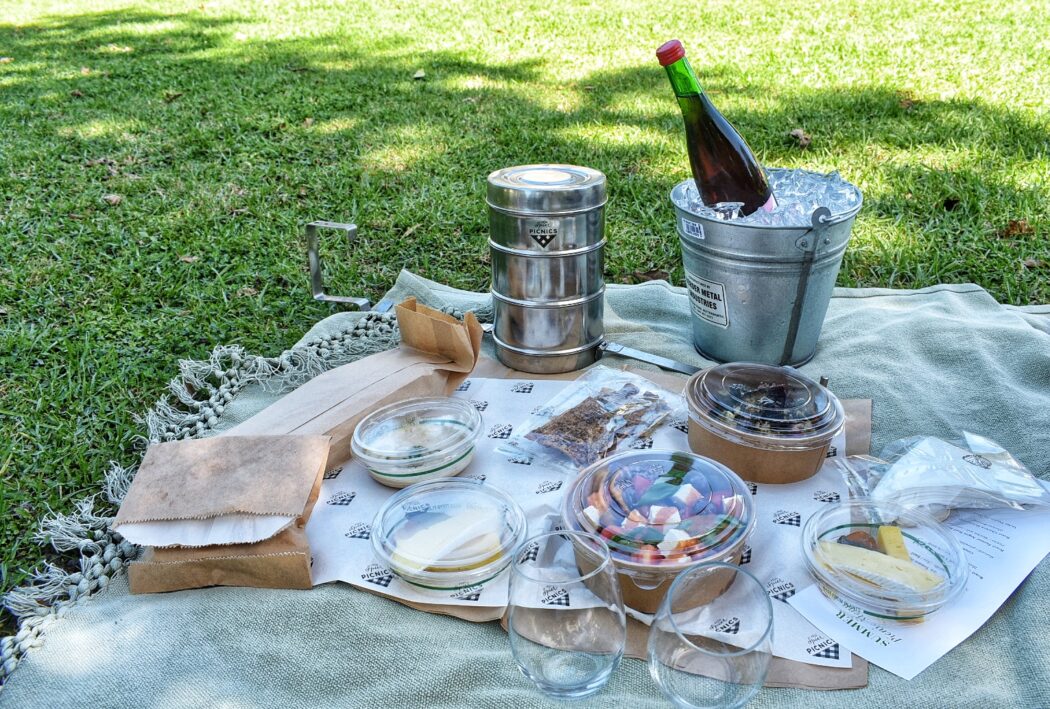
For a start, everything food-related – from The Werf to their relaxing picnics – keeps sustainable, ethical sources in mind.

Much of the farm’s food and goodies are produced on the farm or sourced locally – including their farm shop items and ready-made meals.

Even things like their linens are handmade by Barrydale Weavers. While their online shop offers a wide selection of quality items sourced and grown directly from the farm. Or else, created by their carefully selected, like-minded local partners.
Their gardens, which feature the famous Werf Food Garden, and resident farm animals are also treated with the same love and respect – and it shows.

What’s more, their accommodation offerings also include eco-friendly touches and attractions, such as private natural pools, to give one example.
Boschendal is committed to sustainability and ethical farming in every sense of the word.
Wine region:
Franschhoek
Website:
4) Spier Wine Farm

Spier is almost synonymous with sustainability – and they have been for many years now.
This Stellenbosch estate believes in ethical farming and has a number of initiatives and causes that give back, both to the planet and to its people.
Sustainably minded because:
There are so many reasons why Spier is sustainably minded.
If pressed, you could condense it to their ‘Growing for Good’ initiatives. Diverse in nature but with common community-uplifting, earth-friendly goals, these initiatives “empower communities to make positive social- and environmental-change”.
This includes everything from reducing the carbon footprint to nurturing plants (thereby changing lives) to their wonderful Spier Food Garden.
The Spier Food Garden, for example, allows Megan McCarthy to teach disadvantaged community members how to grow their own fruit, vegetables and herbs using eco-friendly, regenerative ways.

One of the more stand-out initiatives at Spier is their goal of reaching net zero by 2030.
Some mind-blowing stats already achieved include:
– generating some +/- 280 000 kWh of electricity through their nine solar installations in 2021 alone;
– saving 116 tons of carbon in 2021 through their cellar’s carbon-reduction strategies;
– slashing their greenhouse gas emissions by 30% by 2017 (when compared to 2009 levels).


Other incredible achievements include their organic- and solid-waste recycling endeavours and earth-friendly farm.
Of Spier’s 620 hectares, 20 hectares are under organic vineyards and 93 hectares are under conservation.
There are so many other ways that Spier is championing sustainability; far too many for me to list here. For more insight, please visit their website.
Wine region:
Stellenbosch
Website:
5) Villiera Wines

This family-owned and run-Stellenbosch estate is another one I love and respect. Particularly for their efforts to uplift local communities and promote a more sustainable future for all.
With everything from eco-friendly farming practices to conservation efforts at play at Villiera Wines, they are definitely doing good!
Sustainably minded because:

Villiera is sustainably minded for a number of reasons, as evidenced through the ‘Doing Good’ section of their website.
When I visited the farm a few years ago, I learnt and saw first-hand how they are giving back and doing their bit to help both our people and our struggling planet.
In 2010, they installed solar panels on the roofs of three buildings before adding some additional panels in 2017. In July 2022, they went even further by doubling this and today, they are capable of generating 340 Kw of power.
Additionally, their large storeroom and cellar receive their lighting from these solar domes. The domes themselves naturally reduce the carbon footprint and allow the farm to use cleaner, renewable energy.

Not stopping at power, the farm also taps into water conservation. Apart from 40 hectares of dryland vineyard, the farm’s remaining 130 hectares is irrigated via a drip irrigation system.
Using neutron probes that measure vineyard moisture, the vineyards are only watered when necessary. This eliminates water wastage.
In 2017, Villiera also installed a water harvesting system; roof water is diverted through rudimentary filters into the irrigation dams. In a normal rainfall year, this gives the farm some six million litres of rainwater.

This isn’t even taking into account their sustainable farming practices, thriving bee colony and environmentally friendly vineyard practices.
In many ways, sustainability is the lifeblood of this magnificent farm.
Giving Back to Nature…

Villiera also has amazing conservation wilding and greening projects underway.
As some of you may know, the farm is home to an incredible wildlife sanctuary, where everything from giraffe to waterbuck reside.
Established in 2009, the sanctuary has seen the farm set aside some 220 hectares for this worthy cause. (This includes twelve dams and marshlands home to a wealth of birdlife.)
The farm also has an indigenous tree project, which aims to rehabilitate fallow land. To date, they have planted over 100 000 indigenous plants.
Most of these trees were grown in recycled containers by their staff, while others were kindly donated by the Cape Garden Centre.
Villiera also has a unique, yet fascinatingly powerful green fencing initiative going. Since 2016, they have incorporated greener boundary fences by planting double rows of acacias.
Acacias are incredible tress that suck up carbon, clean and cool the air and also serve as homes for insects, birds, small mammals and reptiles.

…and to Our People
Aside from their impressive nature conservation and green efforts, Villiera also does outstanding work in social sustainability.
They spearhead the Pebbles Project, which enriches the lives of thousands of children in the Winelands.
They are also home to the Owethu Clinic and the Early Childhood Development Centre and the After-School Club.
Through these programmes, Villiera Wines has deservedly received great recognition and accreditation and above all, given back to local communities in life-changing ways.
Wine region:
Stellenbosch
Website:
6) Babylonstoren

This historic, world-famous farm, situated near Franschhoek, needs little introduction.
Anyone who has heard of or visited Babylonstoren knows they do one thing very well: ensuring happy people and happy animals.
So there is no question of their sustainability and the ways they actively give back to people, animals and nature – but let me break it down for you in finer detail.
Sustainably minded because:

Babylonstoren, aside from offering one of the Cape’s finest, most amazing gardens (which offers fresh bounty, blooms and beautiful crops), is a haven for animals and all things that grow.
Their Bakery and eateries, which include Babel and Greenhouse, also give a mind to the earth, with their seasonally inspired, locally sourced menus, freshly made baked goods and of course, fork-to-table philosophies.

Their accommodation- and spa-facilities – which include a stunning hotel, heated vitality pool, outdoor swimming pool, farmhouse and cottages – also do good, through their wooden produce boxes (that greet hotel guests), seasonal menus and other touches that keep nature or sustainable practices in mind.
Babylonstoren’s famous garden consists of 15 clusters, which span vegetable patches, stone and pome fruits, bees, herbs, prickly pear maze and much more. The garden covers some 3.5 hectares of the farm.
Each of the 300+ varieties of plants in the garden possesses medical value or is edible.

Aside from the farm’s amazing garden labyrinth, this working farm and wine estate also:
– makes excellent wine,
– grows plums and citrus fruits for export;
– harvests their fruits for garden juices;
– makes their own rooibos- and honey bush-teas;
– grows proteas;
– makes compost for use on the garden and farm;
– and houses their happy farm animals that live leisurely on this beautiful farm.

Let’s not forget Babylonstoren’s own Farm- and Online-Shops. These both offer the most beautiful, locally sourced and created homeware, food items and more for visitors and guests to enjoy.
The farm utilises everything possible to produce their carefully curated, quality items. (For example, their olive oil soap is from their own harvest and is made from 70% pure olive oil.)
Wine region:
Franschhoek
Website:
7) Diemersdal Estate

Diemersdal is one of my favourite, yet oddly underrated Durbanville wine farms – and since learning about their sustainability efforts, I love them a little bit more.
Sustainably minded because:
For their commitment to conservation and responsible practices, Diemersdal is now recognised as a WWF Conservation Champion.
This has seen them sign a ten-year biodiversity agreement with Cape Nature to establish and preserve a 16.8-hectare conservation area.
The area, which spans the Dorsberg, is populated with critically endangered Swartland Shale Renosterveld, currently South Africa’s most threatened ecosystem.
Beyond this, the estate adheres to alien vegetation removal programmes and endeavours to use all their nature resources responsibly and with the utmost care.

Additionally, they have special waste management and recycling programmes in place.
The estate effectively implements dryland farming, meaning they do not irrigate at all. As a result, their water usage is greatly reduced.
From a nature standpoint, Diemersdal actively encourages natural vegetation, birdlife and small animals (like porcupine, steenbok and caracals) on the farm.
Restored Spaces and Regionally Sourced, Fresh Ingredients

Beyond that, The Farm Eatery at Diemersdal heavily focuses on seasonal, fresh and regionally sourced ingredients.
So much so, that they can’t get fresh – they don’t use the ingredients. Because of this, they are constantly experimenting and evolving their food menus.

The eatery grows many of the herbs and some of the veggies in their own kitchen garden, while their preserves, pickles and freshly baked bread are homemade.
The eatery’s space is another preserved part of the past. It was once a former stable that has been lovingly turned into an elegant, yet traditional-style dining space.
Wine region:
Durbanville
Website:
https://grootphesantekraal.co.za
8) Jordan Wine Estate

This Stellenbosch estate wows from the moment you venture up its quietly unassuming drive, where a road sign tells you to drive slowly and keep an eye out for chameleons. That is the first tell-tale sign of Jordan’s care for nature.
Beyond that, if the immaculate grounds, sprawling gardens home to sunbirds and Cape Dwarf chameleons and dams bustling with water fowl isn’t a giveaway – then let me shed more light.
Sustainably minded because:

Jordan Wine Estate is big on environmentally friendly practices and farming methods. This means they have a firmly sustainably minded farming approach to ensure they leave a gentler footprint on the planet.
Jordan believes in the powers of solar and regenerative farming. Because of this, they use things like straw mulch (which saves moisture, cool the vineyard roots and adds organic matter back into their soils) and only grow indigenous plants to help our pollinators.

Aside from several wonderful give-back initiatives, including Premium Independent Wineries of South Africa (PIWOSA), Jordan Chameleon Research Bursary and Women in Wine – Jordan also incorporates eco-friendly touches and methods in everything from their eateries to their accommodation.
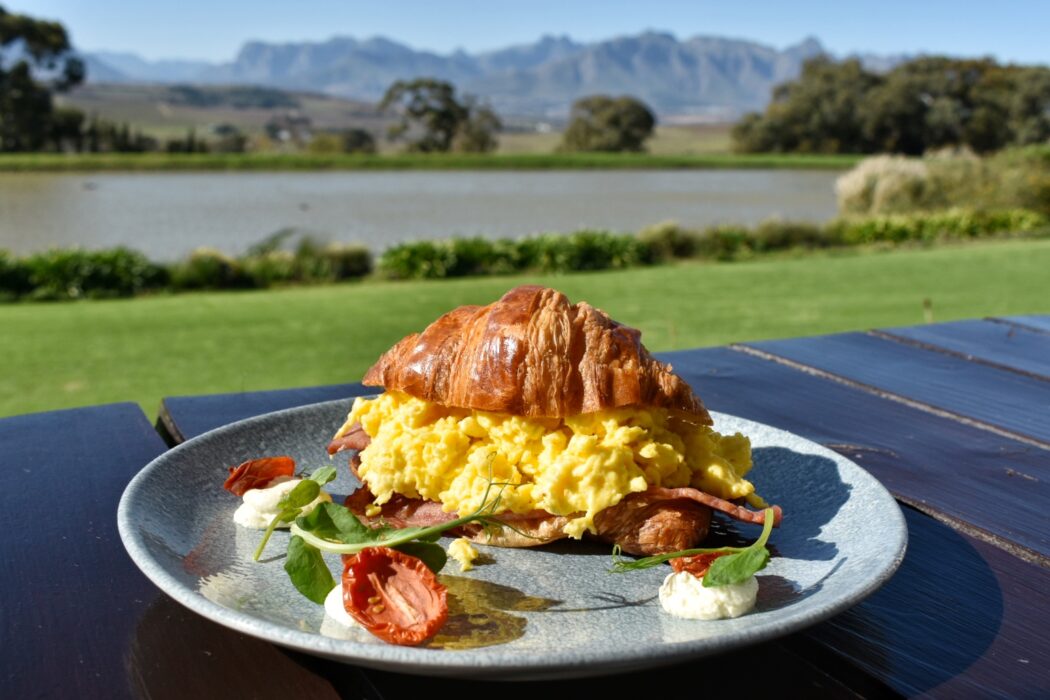
This is clear through the eco-friendly bath- and body-products or the vegetable-focused dishes. These use fresh, seasonal ingredients sourced from surrounding farmers and local suppliers.
These are just some of the ways Jordan gives back and cares for local communities and the planet.
Wine region:
Stellenbosch
Website:
9) Durbanville Hills Winery

This Durbanville estate needs no introduction. For years, it’s been raking in prestigious awards and garnering praise across the wine industry, both locally and internationally.
But what really strikes you about this beautiful, well-run estate is its impeccable attention-to-detail, gorgeous views (from both its eateries and tasting room) and its clear passion for preserving our planet.

Sustainably minded because:
Durbanville Hills has a number of environmentally friendly, sustainable practices in place.
In fact, since their inception in 1999, Durbanville Hills has always done their bit to give back – both to the planet and to its people.

This Durbanville estate has a special focus on:
- careful wastewater management: they were one of the first cellars to recover, treat and re-use wastewater for irrigation purposes);
- carbon footprint reduction: through their four-hectare olive grove, which assists in converting carbon dioxide into oxygen);
- solar power generation: this is supplied through mounted, 375-kilowatt solar panels that help reduce their national load;
- and of course, dedicated renosterveld conservation: this sees them protect close to 320 hectares’ worth of indigenous, highly threatened renosterveld.

And now, to showcase their sustainability initiatives, Durbanville Hills also has a unique, entirely interactive Visitors’ Centre. This provides a wonderful glimpse into the estate’s sustainable farming methods, as well as into its winemaking process.
In early 2024, a few months after its opening, I was invited to explore the Visitors’ Centre – and I found it to be a fascinating, engaging and educational experience from start to finish!

You can discover 3D maps; partake in an interactive VR experience; learn all about the thought process behind their environmentally friendly grape-growing practices (or Integrated Production of Wine (IPW)); discover how they give back through their excellent Workers’ Trust; see their beautiful wine ranges displayed with some interesting backstories (including on their gorgeous wine labels) and information; and so much more.

(For opening times of their visitors’ centre and tasting room, please see here or contact them directly.)
Wine region:
Durbanville
Website:
Disclaimer:
Please note: While I have made every effort to source accurate, factually correct information and stats from reliable, official sources (including estate websites), I accept that some inaccuracies and errors may occur before, during and after publication of this post.
Additional Information and Sources Cited:
For more information on sustainable wine farm practices and producers in South Africa, please visit the following websites:
Would you like to read a Part Two of my Sustainably Minded Wine Farms Near Cape Town? If so, comment below and let me know! 🙂
About the Author




Hi Tamlyn
I most certainly would like to read part 2 of your sustainable wine estates.
I am speaking to sustainably minded estates at the moment as potential places to host our events. We do intimate events that inform, inspire and speak to thriving sustainably, healthily, naturally & are socially uplifting!
So, as you can imagine, this information is very helpful to me.
Thank you!
Kay
Hi Kay,
Thank you so much for the kind feedback. This is definitely one I need to get round to sharing, as I have visited quite a few sustainably minded wine farms.
I love that you are promoting and pushing for more sustainable, intimate events! Hopefully that becomes the next “trend” in the industry because eco-friendly and natural is always cool in my view.
Kind regards,
Tamlyn.